

IELTS
IELTS is the short for International English Language Testing System. It is a test jointly administered, across the globe, by IDP IELTS Australia, Cambridge University and The British Council. It comes in two modules (each module taken for a set of purposes) – The Academic and The General Training. It is enough to take one module depending on the purpose. Each module has four sections – Listening, Reading, Writing, and Speaking
Which Module to be taken:
The Academic Module is taken by those candidates who wish to pursue higher education abroad. The admission to undergraduate and postgraduate studies is based on the result or score of the IELTS test.
The General module is typically for those applicants who wish to emigrate overseas for settlement or work options.
- Listening
-
- (40 questions, 30 minutes)- (Scoring scale: 1-9 bands)
- IELTS Listening has four sections, each with 10 items (or questions). Each item is worth one mark.
- Reading
-
- (40 questions – 60 minutes) (Scoring scale: 1-9 bands)
- Reading has 3 passages and 40 items (questions). Each item is worth one mark.
- Writing
-
- (60 minutes) (Scoring scale: 1-9 bands)
- It consists of 2 tasks (Writing Task 1 and Writing Task 2) and candidates must answer BOTH tasks.
- Speaking
-
- (11-14 minutes) (Scoring scale: 1-9 bands)
- IELTS Speaking is a one-to- one( face to face) interaction between the candidate and an examiner.
Note: You’ll take the first three parts of the test on the same day, in the following order:
1) Listening*
2) Reading*
3) Writing*
4) Speaking*
There are no breaks between these tests. Your Speaking test will be held either on the same day or 7 days before or after that, depending on local arrangements.
- Duration
-
- 60 Hours
- Objective
-
- To train eligible students (those who have the necessary education and pass the assessment) on the topics listed below in order to help them to achieve the minimum necessary band or higher in the “Academic” or “The General Training” Module
- Core Content
-
- General & Specific Techniques & Strategies for Listening / Reading / Writing / Speaking.
- 1) General
-
- - Introduction to the test pattern
- - General Techniques and Strategies
- - Time Management
- - Functional Grammar
- - Common Errors & Correction in Writing & Speech
- - Vocabulary Development
- - Fluency Development
- 2) Listening
-
- - Techniques & Strategies for Effective Listening
- - Difference between Native & Non-native Accent, Dialect & Diction
- - Understanding the “Native” Accent, Dialect & Diction
- - Questions on Recordings
- - Review of Answers with explanation
- - Listen & Speak Drills
- 3) Reading
-
- - Techniques & Strategies for Effective Reading
- - Introduction to Different Styles of Reading
- - Reading & Understanding
- - Tackling unfamiliar words
- - Time Management
- 4) Writing
-
- - Techniques & Strategies for Effective Writing
- - Introduction to Different Styles of Writing
- - Relevance
- - Coherence
- - Paragraphing
- - Developing Ideas
- - Organizing Ideas
- - Time Management
- 5) Speaking
-
- - Techniques & Strategies for Effective Speaking
- - Introduction to Correct Pronunciation
- - Self Introduction Drills
- - Speech Topic Drills
- - Listen & Speak Drills
- - Mock Speech Tests
Topic Covered
- Initial Assessment
- Student Admission (Subject to student’s clearing the assessment)
- Class Room Lectures
- Trainer – Trainee Interaction
- Trainee – Trainee Interaction
- On-Session Assignments
- Off -Session Assignments
- Continuous Monitoring
- Regular Feedbacks
- Final Assessment
- Experienced Faculties
- Flexibly Timing
- Small batches
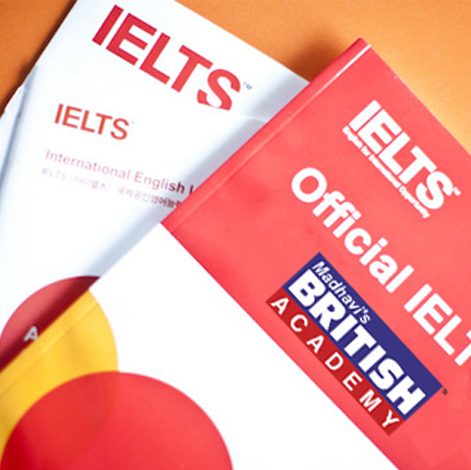
About IELTS
-
IELTS Band Score
You are graded on your performance in the test, using scores from 1–9 for each part of the test: Listening, Reading, Writing and Speaking. Your results from the four parts then produce an overall score.
-
Validity
The score is valid for 2 years
-
Exam Fees
Rs 12650/-
-
Registration
The registration is done Online.