

Study in Switzerland
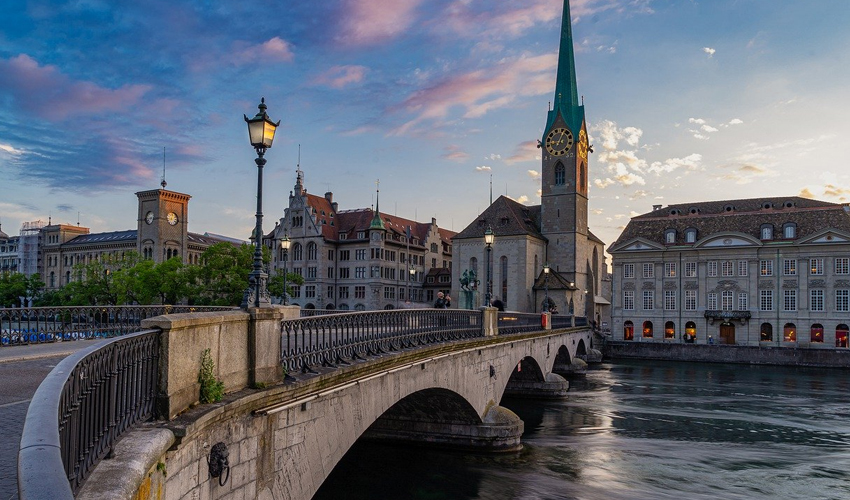
Speak of Switzerland and what comes to the mind is sparkling snapshots of a bewitching dreamland! But then, all that is small wonder, as the country is endowed with pleasing sceneries right across its expanse and attracts tourists from every corner of the world.
Tourism, a bustling activity throughout the year, has invariably given raise to awe-inspiring hotels. While the hard-to-resist natural settings draw tourists, Swiss hotels are geared up to greet every tourist with nothing short of ‘luxury par excellence’.
Further, Tourism and Hotel are two primary sources of revenue to the Swiss Government. Thus, Switzerland and Tourism and Hotel being inseparable, the entire country revolves around these two industries. If the topography, geology and the resources are a natural gift, it is interesting to see what makes it possible to harness them – to turn these natural resources into revenue-generating avenues.
Switzerland is home to much more than chocolate and cuckoo clocks and also an amazing place to study. Studying in Switzerland offers a European experience in a developed, yet diverse country. With a variety of nations bordering the country, it’s a cultural melting pot, which makes it great for an inspiring study experience.
Switzerland is one of the most beautiful countries in Europe and famous for high standard education and ground-breaking research. For this reason, Swiss MBAs and PhD programs are renowned and appreciated worldwide. As a European business hub, young adults not only dream of studying here, but they also consider pursuing a career in Switzerland after finishing their degree studies.
Quality : Many Swiss universities in the world’s top 100 ranked universities - most notably ETH Zurich, EPFL, the University of Zurich and the University of Geneva.
Safety : As records imply, visitors to Switzerland can rest assured about their safety. While human in-habitations are well protected against any natural calamities, there are strict laws, well protected by the uncompromising law enforcing agencies, to guard people against human atrocities. Even a cursory glance at the international scene of violence and terrorist activities could reveal how safe Swiss is!
The education system in Switzerland is internationally recognized for its excellence. Beside the state-funded establishments, Switzerland also offers a wide choice of high quality education at private schools. Both public and private establishments provide a comprehensive range of education at all levels.
Switzerland divides its education system into Primary, Secondary and Tertiary levels. At every level there are educational possibilities open for International students. The tertiary stage covers universities and higher vocational training. Switzerland has universities providing general education and universities of applied sciences. Higher vocational training is provided by higher technical schools, leading to vocational certificates and higher vocational diplomas. Both types of institute make up a solid network of educational institutions in Switzerland offering high-quality opportunities to Swiss and non-Swiss students alike.
Universities in Switzerland
There are the 10 Cantonal Universities and the two federal institutes of technology in Switzerland, some of whose histories, particularly in the case of the cantonal universities, date back to the 15th century. The oldest university in Switzerland is located in Basel and was founded in 1460.
All twelve universities operate more or less in the classical tradition of European universities in that they both teach and conduct research, and offer a wide range of studies within the faculties of law and economics, mathematics, natural sciences, humanities and social science.
University-level education in Switzerland follows the bachelor-master system. Like other European countries, universities in Switzerland follow the Bologna system, means it is easy for international students to get transfer between universities in other countries.
Under the new 2-tiered system, the first grade awarded is the bachelor’s degree (180 ECTS credits or three years full-time study) and the second one the master’s degree (90 – 120 ECTS credits or one and a half years full-time study). A Bachelor’s degree is the prerequisite for admittance to studies at Master’s level. A Master’s degree and good grades are the prerequisite for undertaking a doctorate.
Universities of Applied Science in Switzerland
There are eight Universities of Applied Sciences in Switzerland which have emerged since 1997 from the amalgamation and specialization of around 70 advanced technical schools. The universities of applied sciences work under the motto "Equal standards, different approach". In other words, they have the same educational tasks combined with elements of general vocational training while taking a more practical approach.
The universities of applied sciences
- - Provide applied vocational science-based training.
- - Carry out applied research and development.
- - Are key players in promoting knowledge and technology transfer.
- - Offer specialized graduate studies for professionals as a part of life-long learning.
Private Universities in Switzerland
In addition to the institutions of higher learning named above, there are also a number of private universities and educational institutes in Switzerland. With three official languages (French, German and Italian), Switzerland has a lot of schools with an international focus. Switzerland in general has earned international acclaim for the excellence of their private schools.
Private Universities offer language studies, a wide variety of hospitality and service programs, as well as commercial and management courses for BBA, MBA, Executive MBA and DBA degrees.
Switzerland beckons international students from far and near with its highly flexible course options in Hotel Management, Tourism Management, Hospitality Management, Culinary Arts, etc. These options include Certificate, Diploma, Higher Diploma, Post-Graduate Diploma and MBA courses. Obviously, the duration of these courses and the entry requirements vary from one another. One salient feature in terms of flexibility is that these courses can be completed in parts. That is, students may take a break, in the middle, go for some employment, and come back to complete the remaining parts later. By the time they take this break they would have already gained some qualification like Diploma or Bachelor’s and what more they would have also made some money by working not part-time but full-time.
Tuition Fee
- - Tuition fees at Swiss universities are heavily subsidized by the Swiss government means that public university fees are comparatively low to other countries.but , let's keep in mind that the tuition fees associated with private universities will normally be higher than their public counterparts.
- - A public institution will tend to charge between CHF 500 ($500 USD) and CHF 2,000 ($2,000 USD) per semester.
- - Private universities will probably charge higher tuition fees, especially for international students. There is scholarships available, contact your chosen institution for more information about this.
Cost of Living
It is also important that you consider your cost of living when budgeting for studying in Switzerland. The recommended budget for yearly living cost is between CHF 18,000 and CHF 28,000. Students who are from and EU/EEA country are permitted to work up to 15 hours per week during term time, with no limitations outside of term time. Students from any other country are permitted to work 6 months after the beginning of their studies. They will be issued a work permit. For more information about working during your studies, contact your chosen university.
For Diploma
- * Minimum 18 years of age with successfully completed 12 year secondary education.
- * English language skills at a level equivalent to IELTS 5.0 - 5.5 or equivalent.
- * Hospitality orientation and good personality.
For Bachelor’s Degree
- * Minimum 20 years of age with a successfully completed Higher Diploma (or equivalent).
- * Students, whose mother tongue is other than English, must provide an IELTS 5.5 - 6.0 or equivalent certificate in order to receive an offer by the university.
For Master’s Degree
- * Minimum entry age - 21 years.
- * Undergraduate degree from an accredited university.
- * Students whose mother tongue is other than English, must provide an IELTS score of 6.0 or equivalent certificate in order to receive a conditional offer by the university.
